Lawson
Of Human BondageLawson is a young painter and an important companion in Philip Carey’s Paris years: a friend who shares his artistic enthusiasms and daily life, then reappears when their paths have diverged. His story traces both the fellowship and material precariousness of the artists around Philip, from a borrowed book and a shared studio to a modest success in portraiture, a loan made when Philip is hungry, and a renewed encounter in London.
Identity and Introduction
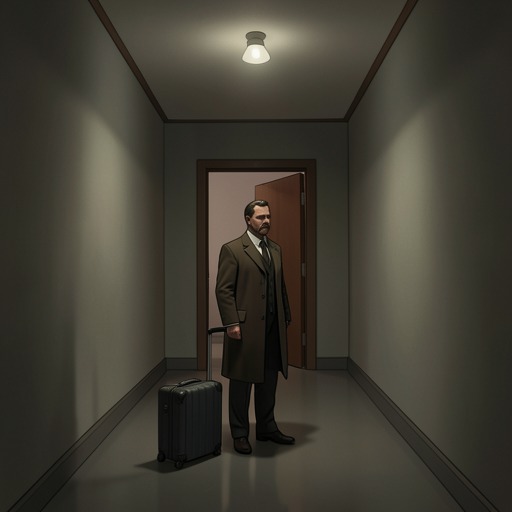
Lawson enters Philip’s social world through Clutton, who introduces him and Flanagan as old friends. At a Paris gathering where students argue over the changing standards of painting, Lawson is seated opposite Philip. He is a thin young man with freckles, red hair, and bright green eyes; his sudden remark signals an abrupt, direct manner. A separate introduction describes Flanagan, not Lawson, as the short, snub-nosed American in the conspicuous jacket and cap, while Lawson is the red-haired youth who fixes his gaze on Philip. The distinction places Lawson among the young painters debating the recent triumph of Impressionism over older schools.
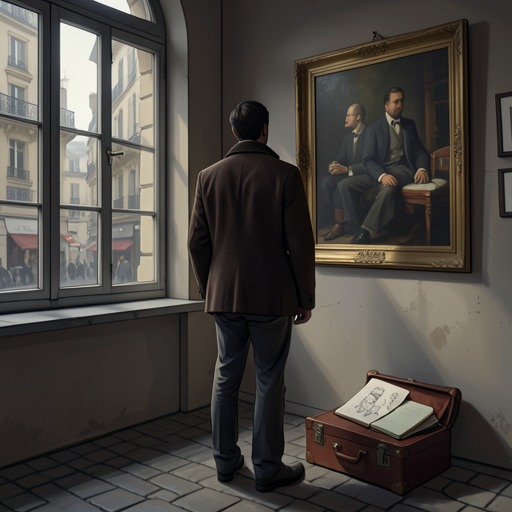
Lawson’s companionship is not confined to the studio. Philip soon becomes close to him, finding him agreeable because of the breadth of his interests. Though his income is small, Lawson likes buying books and lends them freely. Through him Philip encounters Flaubert and Balzac, Verlaine and Heredia, and Villiers de l'Isle Adam. The two also go to plays, visit the gallery of the Opéra-Comique, and share an enthusiasm for the tragedies of Louis XIV and their sonorous Alexandrine verse. At the Concerts Rouge, they listen to music in crowded, uncomfortable surroundings, sustaining their youthful pleasure in the experience despite the poor conditions.
Friendship and Shared Artistic Life
Lawson helps give Philip’s Paris life a stable social and practical center. He proposes that they rent a small vacant studio on a street leading off the Boulevard Raspail. The rent seems manageable when they compare it with hotel costs, and the attached room can serve as a bedroom. Since Philip attends art school in the mornings, Lawson expects to have the studio to himself then. Having tried several schools, he has decided that he works best alone and intends to hire a model several days a week. Their arrangement thus balances companionship with different working habits: a shared base, but space for Lawson’s independent practice.
The studio also becomes a meeting place for their artistic circle. Lawson and Philip host a party, with Ruth Chalice offering to cook and Cronshaw making an exception to his usual habits to eat with them. Clutton, Flanagan, Potter, and other friends attend. With little furniture available, the model stand serves as a table and guests can sit on portmanteaux or on the floor. The meal and improvised seating make the gathering a practical expression of the life they have built: art, friendship, and hospitality fitted into cramped circumstances.
Their intimacy is tested when Philip realizes that Lawson and Ruth Chalice are lovers. The revelation comes during a period of oppressive summer heat, as the three sit late on the terrace outside Ruth’s room. Philip reads the relationship in the way Ruth looks at Lawson and in Lawson’s possessive manner. He is shocked because he has regarded Ruth as a good friend and has not recognized the change in the bond between the two. The scene marks a shift in Philip’s place within their companionship, though it does not end his friendship with Lawson.
Work, Recognition, and Changing Circumstances
Lawson’s career continues after the Paris group disperses. When Philip is living in London, Hayward has only recently settled there when a private-view invitation reaches Philip from Blackstable. Philip takes Hayward to the gallery and discovers from the catalogue that Lawson has a picture in the exhibition. Lawson is therefore still pursuing painting and exhibiting work, a concrete sign of his professional continuity beyond their shared Paris studio.
Later, a profitable Stock Exchange tip gives Lawson and Hayward fifty pounds apiece. The gain is especially welcome to Lawson, who is described as extravagant and as earning little. His portrait-painting career has reached a point at which critics notice him and aristocratic women sit for him without payment. Those arrangements benefit the sitters as well as the painter: the women gain the appearance of patronage of the arts, while Lawson gains publicity. Yet he seldom secures the paying client who wants a portrait of his wife. His satisfaction after the windfall sits against this uncertainty: visibility and fashionable connections have not reliably become income.
The contrast with his earlier decision to work alone is telling. In Paris, Lawson has concluded that contact with art and artists obstructs what he might accomplish, and he leaves for Gerona, a small town in northern Spain that had attracted him during a train journey toward Barcelona. Before going, he quarrels with his Paris friends, offering them what he regards as home truths to make the departure easier. He settles there alone. The narrative reports the decision as Lawson’s attempt to get away from the artistic world, not as proof that isolation resolves his professional difficulties; his later London exhibition and portrait work show that his career continues in changing settings.
Loyalty, Money, and Renewed Contact
Lawson’s friendship with Philip remains consequential after the Paris closeness has faded. When Philip reaches severe financial difficulty and begins pawning his clothes, he cuts his food to one meal besides breakfast. Afraid that Lawson might refuse him, he hesitates before asking for five pounds. Lawson lends the money readily. The exchange reveals a dependable generosity that does not depend on the two men maintaining the same artistic interests or level of intimacy.
Their later meeting in London is marked by the distance that has grown between them. Philip has avoided familiar places and feels he and Lawson no longer have anything in common. When they unexpectedly meet on Regent Street, Philip’s first impulse is to pass without speaking, but Lawson stops him. He recalls having invited Philip to the studio for a gathering and notes that Philip never answered. Lawson then apologizes, asks what Philip is doing, and invites him to the studio to talk. His efforts are informal rather than ceremonious: he treats the silence as a breach that can still be crossed.
During this encounter Lawson also asks whether Philip has heard about Hayward. He explains that Hayward died of enteric fever and says that the news gave him a shock. The disclosure places Lawson once more within Philip’s old artistic network, now a network diminished by migration, estrangement, and death. Philip has received the news of his friend through another friend whose own connection to him has survived neglect and changed circumstances.
Narrative Role and Significance
Lawson is characterized less by a single defining ambition than by a sequence of practical and social roles: the book-lending companion, co-tenant, host, painter seeking his own working conditions, increasingly visible portraitist, and friend willing to lend money. His move to Gerona and later London career show that artistic life is neither a settled identity nor a simple ascent; independence, critical notice, fashionable sitters, and financial security do not necessarily coincide.
His relationship with Philip supplies a durable counterpoint to Philip’s changing judgments and allegiances. They build a shared life around art and culture, undergo a period of altered intimacy when Philip recognizes Lawson’s relationship with Ruth, and later meet after Philip has withdrawn from their former circle. Lawson’s ready loan and attempt to resume conversation show that friendship can persist without restoring its former closeness. By the time he tells Philip of Hayward’s death, Lawson is both a link to an earlier artistic world and evidence of how that world has dispersed.